

Advertising
Why Does the Host Always Eat Last? The 10-Minute Setup That's Letting Thousands of Americans Finally Sit Down at Their Own Dinner Party

There's a photo that exists in almost every family album in America, and nobody ever notices what's wrong with it.
It's the big dinner. Thanksgiving, Christmas Eve, a birthday, the Sunday when everyone finally came over. The table is full, the food is out, everyone is laughing.
And one person is missing from the picture.
She's in the kitchen. Or she's standing, holding a dish, halfway between the stove and the table. Or she's in the photo but she's the only one not looking at the camera, because she's checking whether the green beans are still warm.
That person planned the menu, shopped for it, cooked for two days, and set the table. And when the moment she worked for finally arrives, she spends it as a waiter.
Every host knows this feeling. Almost none of them talk about it, because it feels ungrateful to complain about a party you chose to throw. But it has a name in the hospitality world, and it has a cause — and the cause is physics, not personality.
The Host's Paradox
Here's what actually happens at a dinner for eight.
The food is ready at 6:30. The first guests arrive at 6:35. The last ones arrive at 7:10, because someone always arrives at 7:10. By the time everyone sits, the mashed potatoes have a skin on top, the gravy has gone from a sauce to a gel, and the turkey — which was perfect at 6:30 — is room temperature.
So the host does the thing. She picks up the potatoes and runs them to the microwave. Then the gravy. Then someone wants seconds of the stuffing an hour later, and it's cold, so she does it again. By the end of the night she has made eleven trips to the kitchen, eaten half her plate standing up, and missed the toast.
Meanwhile, every guest politely says the food is delicious, because it is — or it was, forty minutes ago.
This is the Host's Paradox: the more effort you put into the meal, the less of the evening you actually get to spend in it. And the reason is simple. Food cools faster than parties start.
Why Dinner Goes Cold Faster Than You Think
Most people assume a serving dish stays hot for a while once it leaves the oven. It doesn't, and the reason is interesting.
A dish of food loses heat mainly from its top surface, where hot moisture evaporates into the air. That evaporation carries heat away fast, which is why a wide, shallow dish — a platter of sliced turkey, a tray of roasted vegetables — goes from steaming to merely warm within the first fifteen minutes. Deep, dense foods like a casserole hold heat longer, but even those are lukewarm at the center within an hour.
Then there's what cooling does to specific foods:
Gravy and sauces are mostly liquid fat and starch. As they cool toward room temperature, the fat begins to solidify and the starch tightens, which is why cold gravy turns to jelly and develops that unappetizing film.
Mashed potatoes form a skin as the starch on the surface dries, and the inside turns gluey as it cools.
Sliced meat dries out quickly because the cut surfaces release moisture, and once the fat congeals, the texture goes from tender to waxy.
Bread and rolls lose their softness as the starch recrystallizes — the same process that makes yesterday's bread stale.
None of this is anyone's fault. It's just what food does at room temperature. The problem is that a real dinner doesn't happen in fifteen minutes. A good one takes three hours.
The Number Every Caterer Knows (and Most Hosts Don't)
There's a second reason this matters, and it's one professionals take very seriously.
The USDA calls the range between 40°F and 140°F the "danger zone": the temperatures at which bacteria multiply fastest in cooked food. Their guidance is that cooked food shouldn't sit in that range for more than two hours — and that hot food being served over time should be held at 140°F or above.
This is why every catered event, every restaurant buffet, and every hotel breakfast uses heated serving equipment. It isn't just about taste. It's that a tray of stuffing sitting on a tablecloth for three hours is drifting through exactly the temperatures food scientists tell you to avoid.
Home cooks almost never think about this, because nobody's ever told them. But it reframes the question. Keeping food hot at a long dinner isn't a luxury. It's what professionals consider the baseline — and it means any warming device worth buying needs a setting that holds food above 140°F, not just "warm."
The 1890s Craze That Almost Solved This
Here's a piece of history almost nobody knows: America already tried to fix the Host's Paradox once, and it became a national fad.
In the 1890s, the chafing dish — a pan heated by a small spirit lamp underneath — swept through American homes. The idea was simple and, for its time, radical: instead of disappearing into the kitchen, the hostess would cook at the table, in front of her guests. Welsh rarebit, creamed oysters, lobster Newburg. Magazines ran "chafing dish parties" as the hottest way to entertain. Fannie Farmer, the most famous cook in the country, published an entire book in 1898 called Chafing Dish Possibilities.
The appeal wasn't really the food. It was that, for the first time, the person who made dinner got to stay in the room while it happened.
So why doesn't your grandmother own one?
Because the chafing dish had three problems it never shook. It held one dish — fine for rarebit, hopeless for a roast with five sides. It ran on an open flame, which is why fire departments and insurance companies eventually hated it. And once canned gel fuel arrived in the early 1900s, it drifted out of the home and into the catering hall, where it still lives today, next to the hotel scrambled eggs.
Everything since has been a workaround. The oven set to "warm," where dry heat turns moist food to leather and the food is still in the kitchen. The slow cooker, perfect for one dish and absurd for six — six outlets, six cords, a table that looks like a church potluck. The old rigid electric warming tray, which held two dishes, got dangerously hot on the edges, and took up a cupboard for the 360 days a year you didn't need it.
A hundred and thirty years later, the original idea was still right: keep the dinner warm where the people are. Nobody had built the thing that could do it for a whole table.
The Technology That Finally Changed It
What made a real solution possible in the last few years comes from an unlikely place: flexible silicone heating elements, the same technology used in heated car seats and the radiant floor mats in modern bathrooms.
Instead of a heavy metal plate, the heating element is laid into a thin sheet of food-grade silicone. That changes three things at once:
It can be large. A metal tray gets heavy and expensive fast as it grows. A silicone mat can be two feet long and still weigh a couple of pounds — big enough for an entire main course with its sides.
It heats evenly across the whole surface. Radiant heat from below reaches the bottom of every dish equally, like a heated floor, so you aren't hovering dishes over a single hot spot.
It rolls up. When dinner's over, it goes in a drawer like a placemat, not a cupboard like an appliance.
Add a thermostat with a range of levels — gentle ones for bread, and higher ones that hold the surface above that 140°F line for the meat, the gravy and anything with dairy — and a timer so you don't have to think about it, and you have something the chafing dish never was: a device that keeps the whole dinner hot, on the table, for the whole night, with nobody tending it.
The Catch With Most Warming Mats
Search for "food warming mat" today and you'll find a crowd of them. Most look alike in the photos and most share the same weak points once you read the fine print.
They're small. Many are barely larger than a cutting board. Two dishes, maybe three. Fine for a couple's dinner, useless for a holiday.
They have one or two heat settings. Which means either the bread dries out or the gravy goes cold — you can't hold both correctly.
They sit flat on the table. The underside gets hot, and a wooden or glass table doesn't love that.
They're backed by nothing. A six-month warranty on something you'll use on Thanksgiving for the next ten years is not a vote of confidence.
| Chafing dish | Oven on "warm" | Slow cooker | Typical warming mat | Palermo | |
|---|---|---|---|---|---|
| Dishes at once | 1 | 2–3 (in the kitchen) | 1 | 2–3 | 4–5 full-size |
| Keeps food hot for | ~2 h per fuel can | Until it dries out | Hours (one dish) | 2–4 h | Up to 6 h per timer setting |
| Open flame | Yes | No | No | No | No |
| Heat settings | None | 1 | 2–3 | 1–3 | 7 (104–212°F) |
| Works with your own dishes | No (its own pan) | Yes | No (its own pot) | Yes | Yes — glass, ceramic, metal |
| Safe on a wooden table | Risky | — | Yes | Often hot underneath | Yes — elevated feet |
| Timer / auto shut-off | No | No | Some | Rarely | 1–6 h + auto off |
| Storage | Bulky stand | — | Cupboard | Rigid or semi-rigid | Rolls up in a drawer |
| Warranty | — | — | 1 year | 6–12 months | Lifetime |
| Chafing dish | Typical mat | Palermo | |
|---|---|---|---|
| Dishes at once | 1 | 2–3 | 4–5 |
| Keeps hot for | ~2 h | 2–4 h | Up to 6 h |
| Open flame | Yes | No | No |
| Heat levels | None | 1–3 | 7 |
| Your own dishes | No | Yes | Yes |
| Safe on wood | Risky | Often hot | Feet |
| Timer | No | Rarely | 1–6 h |
| Storage | Bulky | Rigid | Rolls up |
| Warranty | — | 6–12 mo | Lifetime |
The mat itself is a good idea. The execution is where most of them fall down.
How a Small Family Business Ended Up Solving It
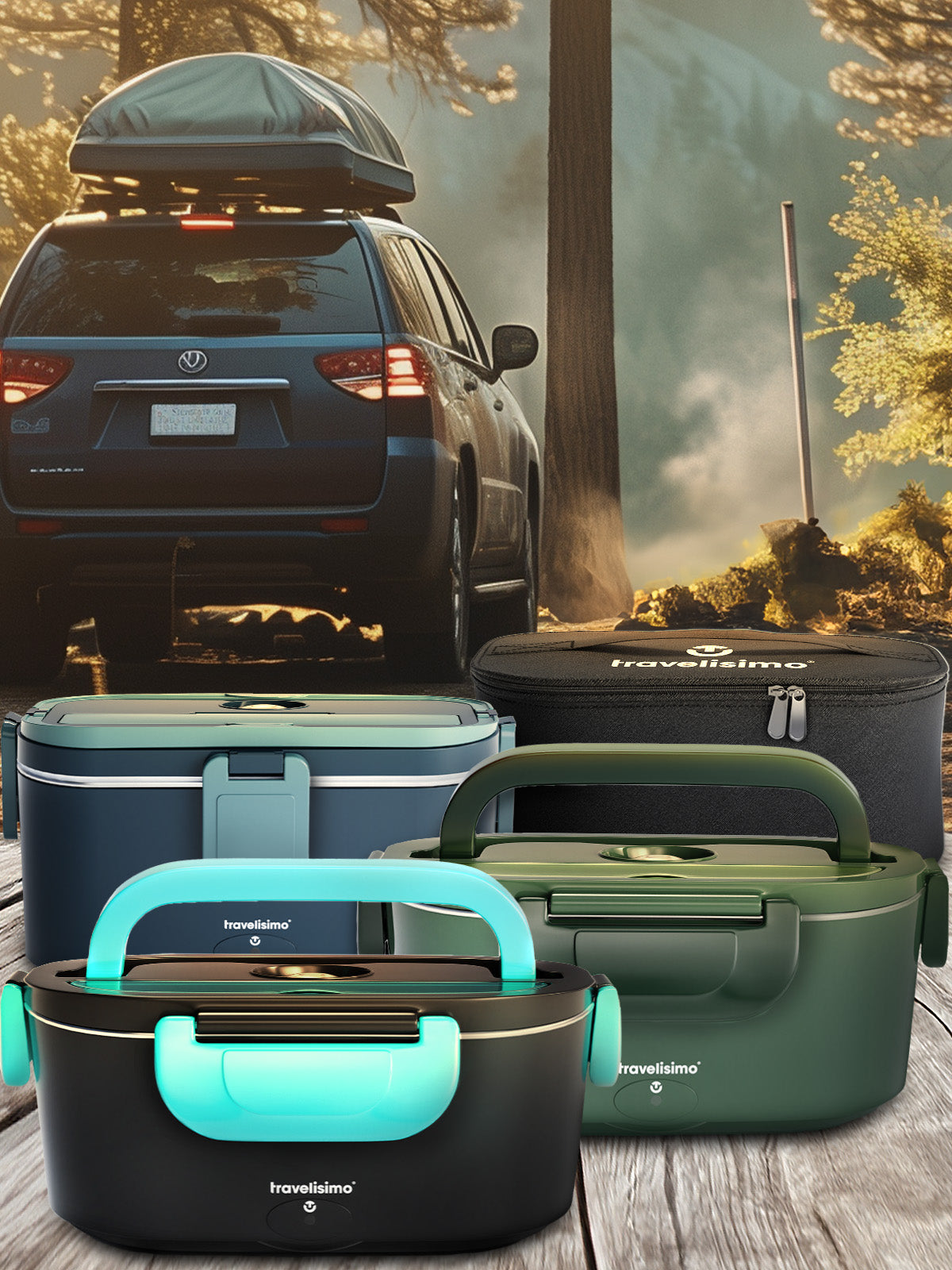
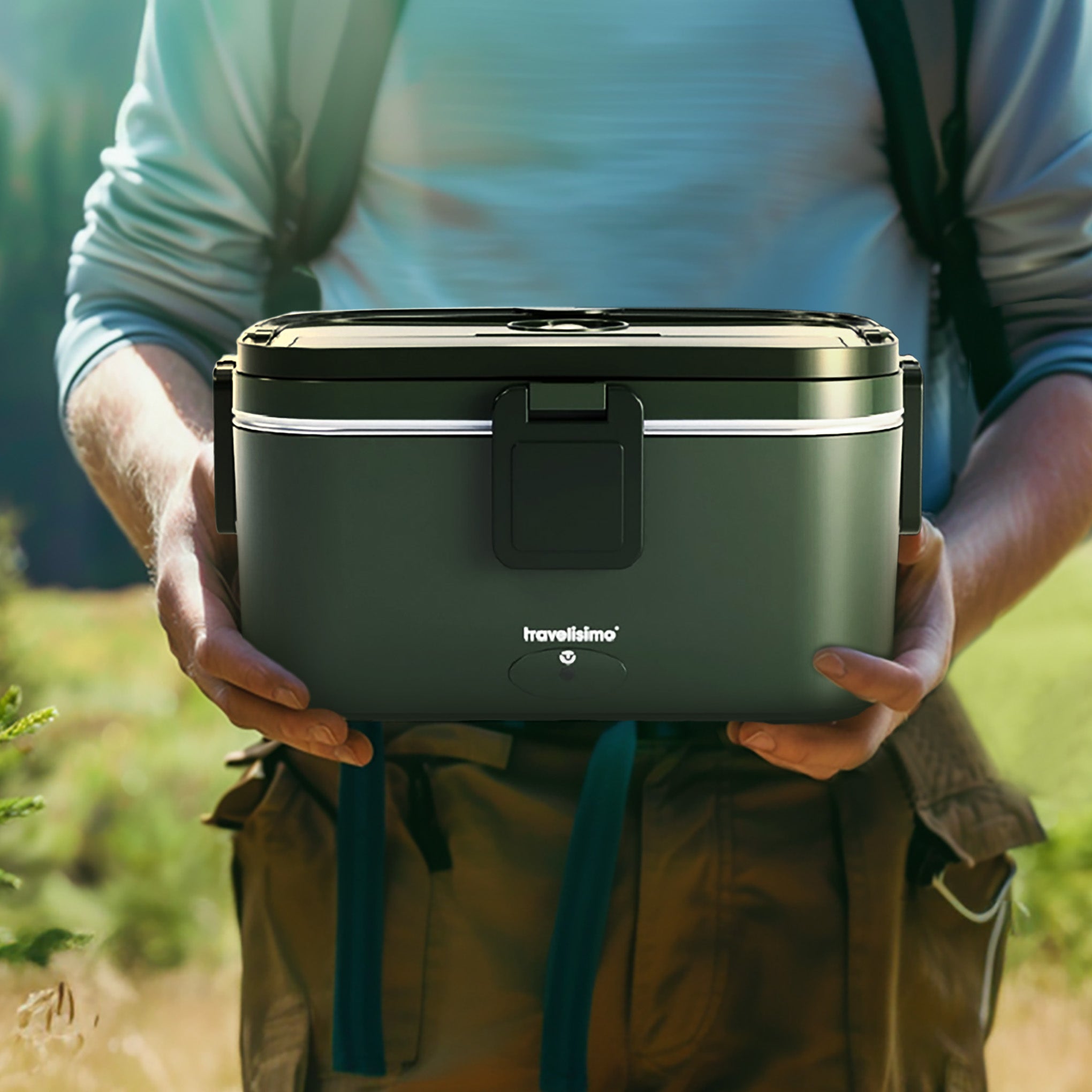
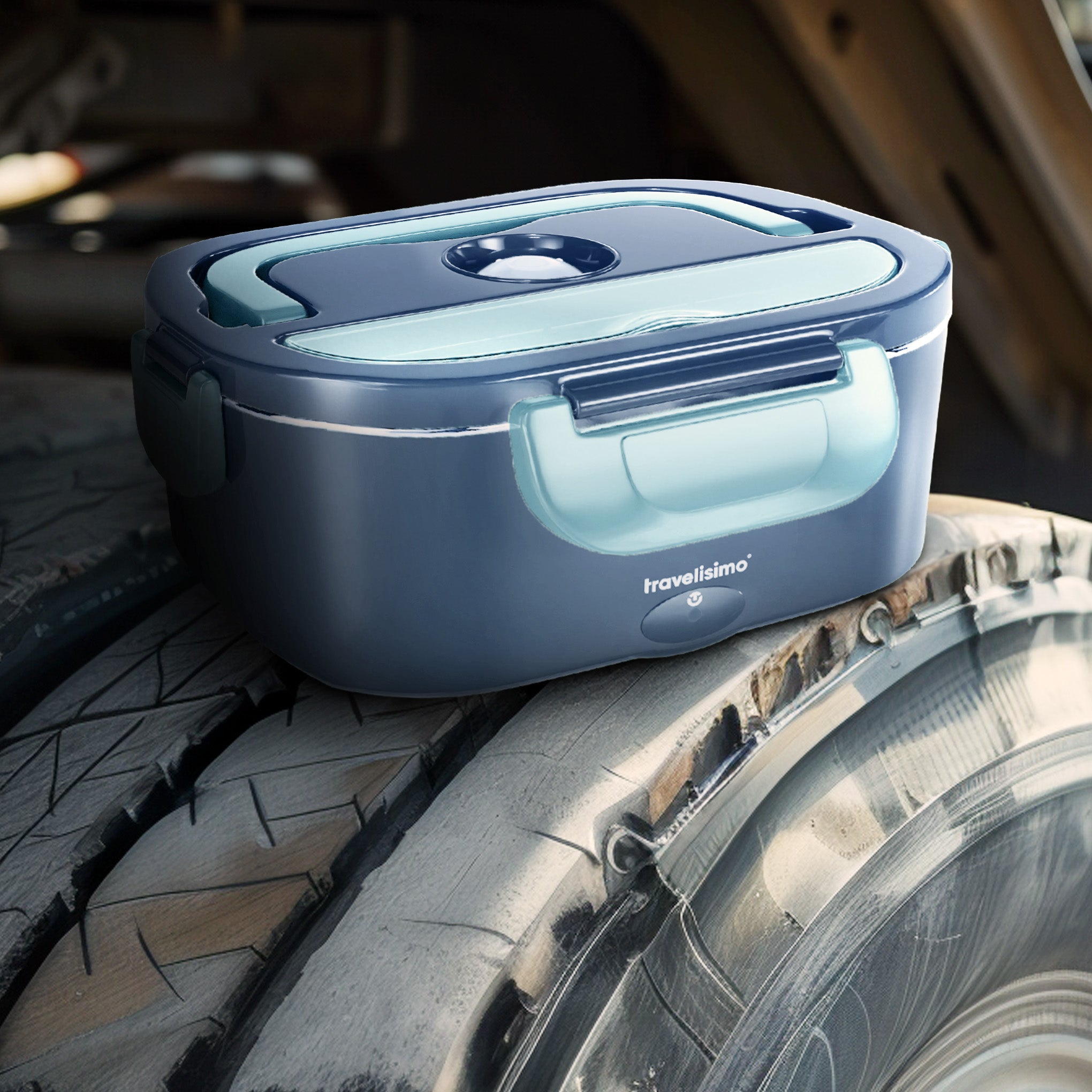
Travelisimo didn't come from the catering world. It's a small, family-owned company that makes gear for keeping food hot on the move — electric lunch boxes, food warmers, bottle warmers — and that has more than 30,000 customers who rely on it to eat a hot meal in a truck cab, on a job site, or at their own table.
Over the years, the team kept hearing the same request from those customers' other life: "I can eat hot at work now — why can't I keep dinner hot at my own party?"
When they looked at the warming mats on the market, they found the same list of problems above. So they built around them.
The result is the Palermo, a food warming mat designed specifically for people who host — and who would like, for once, to sit down.

- Free shipping
- 30-day money-back
- Lifetime warranty
What Makes the Palermo Different
- 24 × 16 inches — room for the whole feast. Four to five full-size dishes at once: the main, two sides, the sauce, and the bread. One surface, one plug, one setup.
- Keeps food hot all evening. Set the timer for anywhere from 1 to 6 hours before the first guest arrives, and it's still holding temperature when the last one leaves.
- 7 precise temperature levels, 104°F to 212°F. The two lowest levels are for bread, rolls and warming plates. For anything with meat, sauce or dairy, set it to level 4 or higher — that keeps the surface above the 140°F line caterers work to. The LED display shows exactly where you are.
- Works with the dishes you already own. Glass, ceramic, stainless steel, aluminum, heat-resistant plastic. Pots, trays, gravy boats — straight onto the mat.
- Elevated feet, no open flame. The mat sits above the table on small feet, so the heat goes into your dishes, not your furniture. Overheat protection, child lock, and an automatic shut-off if you forget the timer.
- 1–6 hour timer, plus a safety cut-off. Set the timer and stop thinking about it. If you forget to set one, the mat switches itself off after 2 hours — so for a long dinner, set the timer.
- Rolls up like a placemat. Wipe the silicone surface with a damp cloth, roll it, and slip it into the included travel bag — a drawer at home, or the car if the party is at someone else's place.
- Four colors to match your table. Dark Grey, Dark Blue, Black, and Beige. It's meant to sit on a dining table, not look like it came from a hotel buffet.


What Travelisimo Hosts Say
Bought this for my mom who hosts every holiday. She says it's the best gift she's ever received. Now her food stays perfect all night.
I finally got to sit down and enjoy Thanksgiving dinner with my family instead of running back to the kitchen every 10 minutes.
Used it every weekend for 6 months and it still works perfectly. The temperature control is precise and the mat is so easy to clean.
Most popular · Duo Pack
$106.20 $118
Two Palermo mats · Save $11.80 · Free shipping · Ships within 24h · 30-day money-back · Lifetime warranty
Get the Duo Pack — $106.20 →Two mats cover a full holiday buffet — or keep one and gift one to the friend who always hosts.
Just need one? A single Palermo is $59.
What to Realistically Expect
The Palermo is a warming mat, not an oven, and it's worth being clear about what that means.
It's built to keep hot food hot — not to cook, and not to reheat something from the fridge. The routine is simple: unroll it on the table or buffet, plug it in, pick your level, and let it preheat for 10 to 15 minutes while you finish in the kitchen. Then dishes go straight from the stove to the mat and stay at serving temperature for hours.
It draws 250 watts — about a quarter of a hair dryer — so one ordinary outlet is all it needs. And like any heated surface, it's warm to the touch while running; the feet and the overheat protection are there so that's never a problem for the table underneath.
If you're looking for something that reheats leftovers, this isn't it. If you're looking to put dinner on the table once and then be a guest at your own party, that's precisely what it was built to do.
Common Questions
Does it really keep food hot for 6 hours?
Yes. Set the timer for up to 6 hours and the full-surface heating holds your dishes at the level you chose the whole time, then shuts off by itself. One thing to know: if you don't set a timer at all, a safety cut-off switches the mat off after 2 hours. So for a long dinner, set the timer when you plug it in.
Does it work with my dishes?
With practically all of them: glass, ceramic, stainless steel, aluminum and heat-resistant plastic. Pots, trays, pans, gravy boats — set them straight on the mat.
How much food fits on it?
The mat is 24 × 16 inches — room for 4–5 full-size dishes at once: the main, a couple of sides, the sauce and the bread.
Does it heat up cold food?
No — the Palermo is a warming mat, designed to keep hot food hot, not to cook or reheat from cold. Give it 10–15 minutes to preheat while you finish cooking, then set your dishes on it.
Is it safe to leave on during a long dinner?
Yes — that's what it's built for. No open flame, elevated feet, overheat protection, a child lock so nobody bumps the settings, and a 2-hour safety cut-off that kicks in only when no timer is set.
What surfaces can I use it on?
The mat stands on elevated feet, so the heat goes up into your dishes rather than down into the table. It's used on wood, glass, granite, quartz, marble and laminate dining tables and countertops. Two habits worth keeping with any heating appliance: don't set it on a tablecloth or runner that could bunch up under the feet, and let it cool before you roll it up.
How do I clean and store it?
Let it cool, wipe the stain-, water- and oil-resistant silicone surface with a damp cloth, and roll it up like a placemat. It comes with a travel storage bag, so it slips into a drawer — or the car, if the party is at someone else's place.
How long does shipping take?
Orders ship within 24 hours from our U.S. warehouse, and you get a tracking number by email the moment it leaves. Shipping is free.
What if I don't like it?
You have 30 days to try it at real dinners. If it doesn't make hosting easier, tell us and we'll refund every cent — no questions, no return hassle.
What does the lifetime warranty cover?
Every Palermo is covered against electrical or quality defects for life. If it ever fails you, we make it right.
Where to Get One Before the Holidays
The Palermo is sold directly on Travelisimo's website for $59, with free shipping and dispatch within 24 hours.
The one most hosts go for is the Duo Pack: two mats for $106.20, $11.80 less than buying them separately. Two mats side by side cover a full holiday buffet — mains on one, sides and sauces on the other — and for a smaller dinner, the second one goes to the friend or family member who always ends up hosting.
For reference, a pair of chafing dishes with a season of fuel runs about the same and holds two dishes. The Duo holds ten, uses no flame, and both fit in a drawer.
Ordering direct from Travelisimo is also what gets you the 30-day money-back guarantee and the lifetime warranty described below — the two things that take the risk out of trying it. With Thanksgiving and the December holidays a few weeks out, Duo Pack stock is restocked in batches.
Get the Duo Pack — $106.20 →- Free shipping
- 30-day money-back
- Lifetime warranty
Backed by a 30-Day Guarantee and a Lifetime Warranty
Every Palermo ordered on travelisimobrand.com comes with an unconditional 30-day money-back guarantee. Host a dinner, a birthday, a holiday — put it through a month of real gatherings. If it doesn't make hosting easier, tell us and we'll refund every cent, no questions and no return hassle. And every Palermo bought direct carries a lifetime warranty against electrical or quality defects: if it ever fails you, we make it right.
This year, be in the photo.
Get the Duo Pack — $106.20 →- Free shipping
- 30-day money-back
- Lifetime warranty